
How to Pair Natural Stone Walkways with Garden Beds
A well-designed walkway should do more than carry people from one part of the yard to another. It can establish the garden’s shape, guide attention toward favourite plants, and make an outdoor space easier to enjoy in every season.
For homeowners across the GTA, the challenge is creating a path that looks natural while standing up to freeze-thaw cycles, heavy rain, and everyday family use. The stone, foundation, drainage, edging, and planting plan all matter. When these elements are considered together, a walkway feels like part of the landscape rather than an addition laid on top of it.
This guide explains how to combine garden design with natural stonework and masonry, from choosing a route and stone to planning durable edges and low-maintenance planting.
Begin with the Route, Not the Stone
Before comparing flagstone colours or laying out stepping stones, decide how the walkway needs to function. Identify its starting and ending points, then consider the destinations it may connect along the way: a patio, garden gate, shed, seating area, pool, or side entrance.
Straight paths generally create a formal appearance and offer the most direct route. Gentle curves feel more relaxed, but every bend should have a purpose. Curves that weave unnecessarily through a small yard can make the space feel cramped and encourage people to cut across the garden.
For a flagstone walkway installation through garden beds, use the path to reveal the landscape gradually. A wider planting bed along the outside of a curve creates room for a specimen shrub, ornamental grass, or seasonal colour. Low plants near the inside edge preserve visibility and keep the route comfortable.
Width is important as well. A narrow stepping-stone path may suit an occasionally used garden corner, while a main walkway should allow people to move comfortably, carry bags, or walk beside a child. Multi-generational households may also benefit from fewer joints, a more even surface, and smooth transitions at either end.
The goal is a logical route that serves the household first. The stone and plants can then reinforce that structure.
Choose Stone and Edging for Long-Term Performance
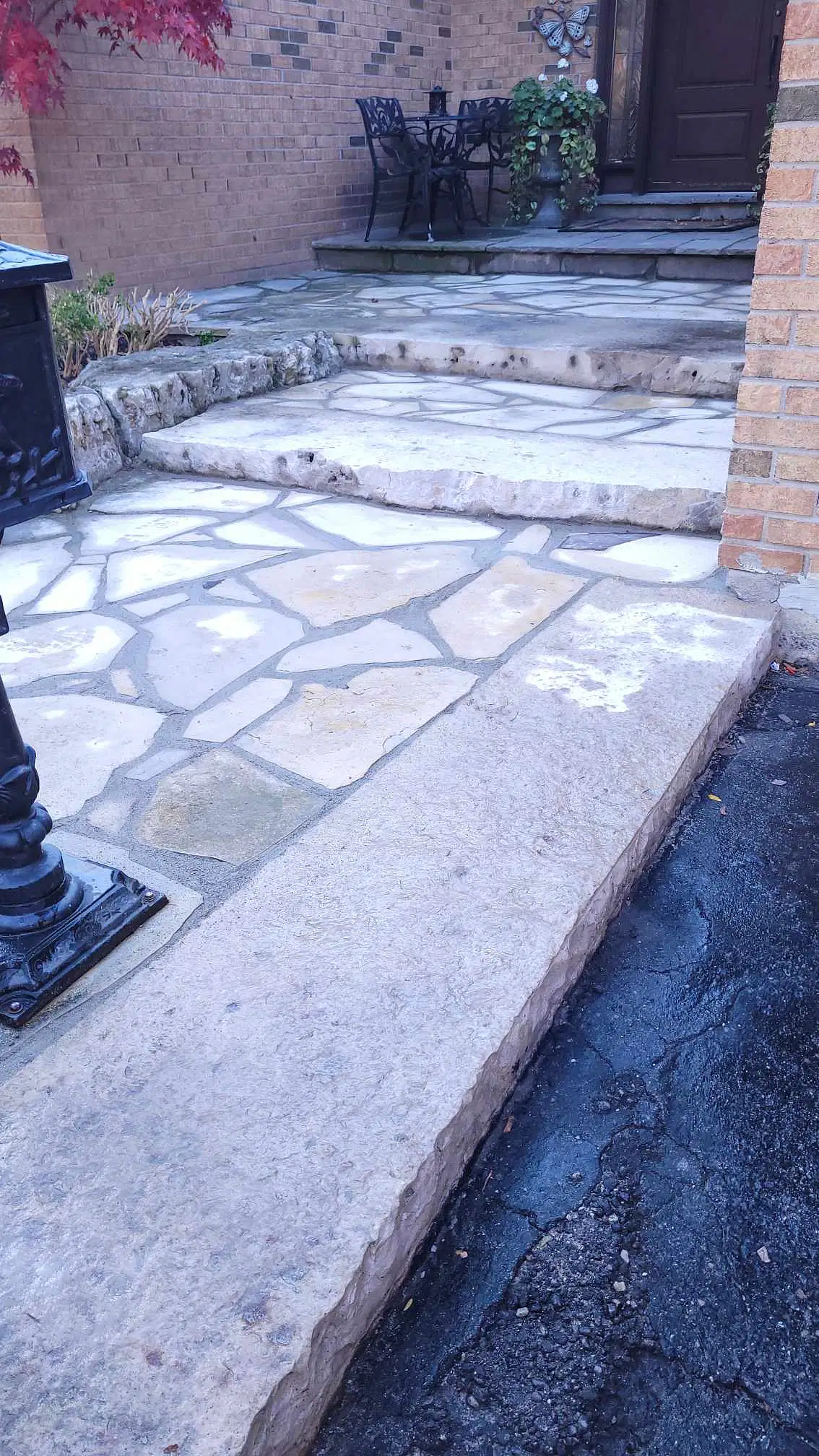
Natural stone varies in thickness, texture, shape, and colour. Large irregular flagstones create an organic garden path, while rectangular-cut stone produces a more architectural look. In either case, textured walking surfaces are preferable in areas exposed to rain or irrigation. Very smooth stone can become slippery when wet.
Colour should complement both the house and the garden. Warm buff and brown tones pair naturally with red brick and wood, while grey stone works well with contemporary masonry and cooler planting palettes. Bringing actual samples into the yard is more reliable than choosing from a small photograph because sunlight can change how the material appears.
Durability depends just as much on what sits below the stone. A professionally built walkway typically requires excavation, a properly compacted granular base, careful setting, and drainage planning. Skipping base preparation may reduce the initial price, but it increases the risk of rocking stones, settlement, and uneven joints after winter.
Edging also deserves attention. Durable natural stone walkway edging can be created with larger border stones, compatible masonry, or a discreet restraint selected for the installation. The edge should:
- Keep adjacent soil and mulch from spilling onto the path
- Help maintain the intended line of the walkway
- Reduce erosion around individual stones
- Allow garden maintenance without damaging the path
Surface water should move away from buildings without being redirected toward neighbouring properties or trapped in garden beds. If construction affects grading, drainage infrastructure, or protected areas, ask the municipality whether approvals are required. A simple garden path may not need a permit, but larger hardscaping and grading work can be subject to local rules.
Build the Planting Plan Around the Walkway
The most effective planting schemes frame the route without overwhelming it. Plants beside a walkway should have mature sizes that suit the available space. A small perennial planted too close to the edge may be harmless, but a shrub that eventually spreads across the walking surface creates an ongoing pruning problem.
Use three general layers to blend stone into the garden:
- Low edging plants soften joints and hard borders without obstructing the route.
- Mid-height perennials and grasses add movement, colour, and seasonal interest.
- Taller shrubs or small trees provide structure and help define destinations.
Suitable native and climate-adapted choices may include wild geranium for partial shade, little bluestem for sunny and drier areas, ninebark for durable shrub structure, and serviceberry as a small feature tree. Selection should always reflect the site’s sun exposure, soil, drainage, and available space rather than relying on a one-size-fits-all plant list.
Native planting, permeable joint treatments, and smart irrigation reflect the growing preference for water-conscious, lower-maintenance landscapes. Drip irrigation or a properly programmed smart controller can direct water to roots without continually soaking the path. Local watering restrictions should also be reviewed before establishing new gardens or sod.
Earthstone Landscapes can coordinate gardens and sod with the walkway design so bed lines, soil preparation, irrigation needs, and plant spacing are planned as one project.
Plan the Budget, Timing, and Contractor Carefully
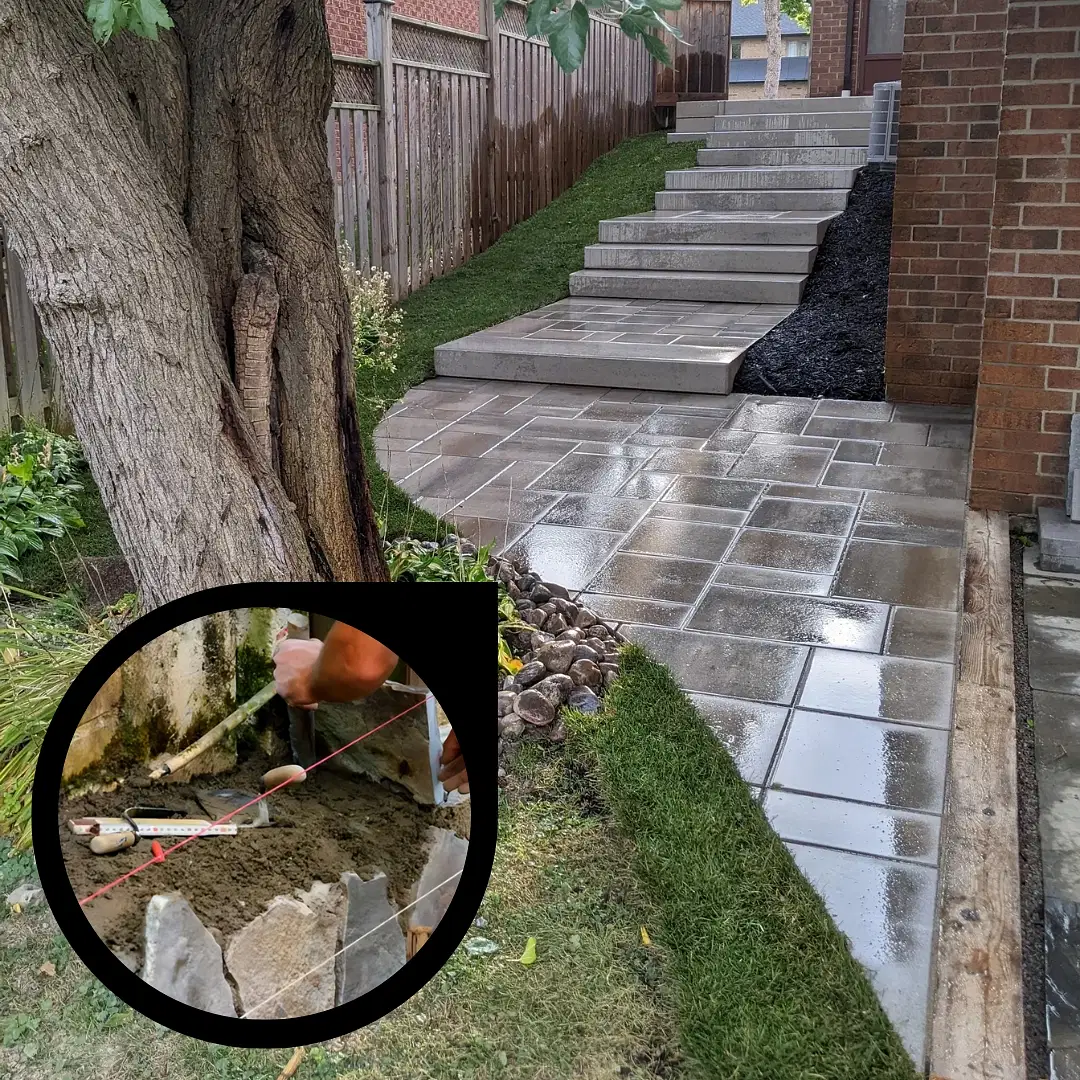
There is no dependable universal cost per square foot for this type of project. Pricing changes with stone selection, access for equipment, excavation depth, disposal requirements, walkway geometry, drainage work, and the amount of planting involved. Irregular flagstone may also require more fitting and skilled labour than a standardized unit.
A useful estimate should separate or clearly explain:
- Site preparation and excavation
- Base materials and compaction
- Stone supply and installation
- Edging and joint treatment
- Soil, plants, mulch, or sod
- Drainage corrections and restoration
This distinction also clarifies hardscaping versus softscaping. The walkway, base, and masonry edges are hardscape; plants, soil, mulch, and lawn are softscape. Budgeting for both from the beginning avoids ending up with a beautiful path surrounded by unfinished beds.
Spring and autumn can fill quickly because the outdoor construction season is limited. Starting the design and estimate process early provides more time to source suitable stone and plants. When evaluating a contractor, review comparable projects in their gallery, confirm liability insurance and applicable workplace coverage, and ask how schedule updates, changes, and site protection will be handled.
Earthstone Landscapes approaches outdoor projects with professionalism, quality workmanship, and clear client communication. If you are planning a walkway, patio connection, garden renovation, retaining wall, lighting, or restoration project around Bolton, contact Earthstone Landscapes to discuss a coordinated landscape that is attractive, practical, and built for lasting use.